




|
movements and footsteps. Towards the end, it is supposed
the deity shows its presence and becomes one with the performer. The
atmosphere becomes tense, colourful and noisy with arppuvili,
‘kathinavedi’ and vay kurava. The deity takes quick and rhythmic strides. In
a few minutes everything attain a pacified mood. Now it is decided, Kavilamma and villagers are safeguarded from the ill effects of wicked
deities. Actually structure of kolam, rhythmic foot strides, leg movements and
melodious singing are the factors those make Kolamthullal both tense and beautiful.
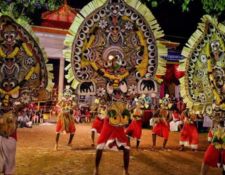
Each kolam reaches the Kalam (stage) after
performing certain customary steps of worship such as Ganapathy and
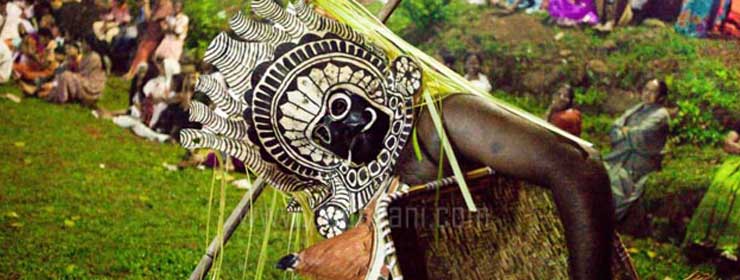
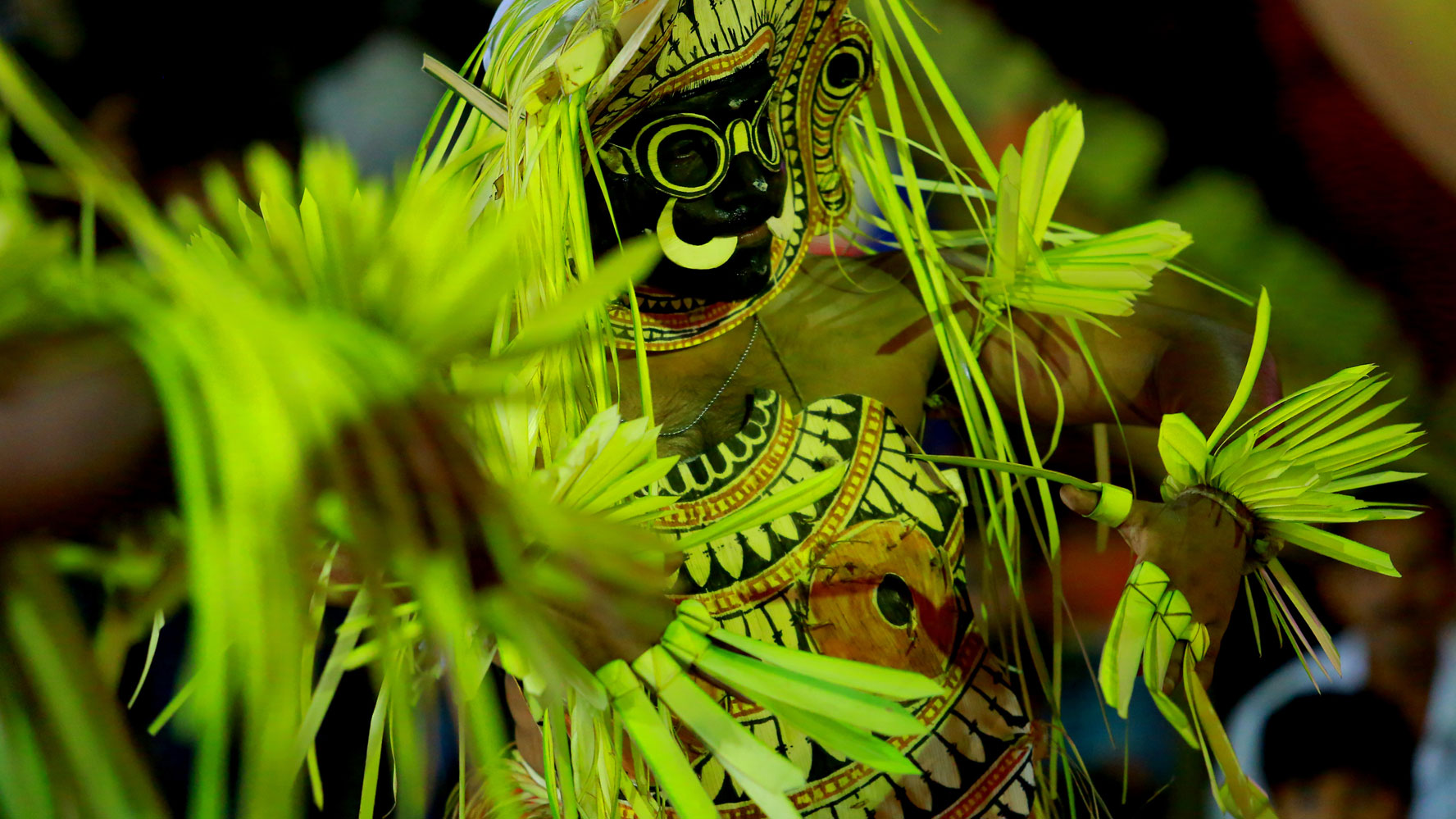
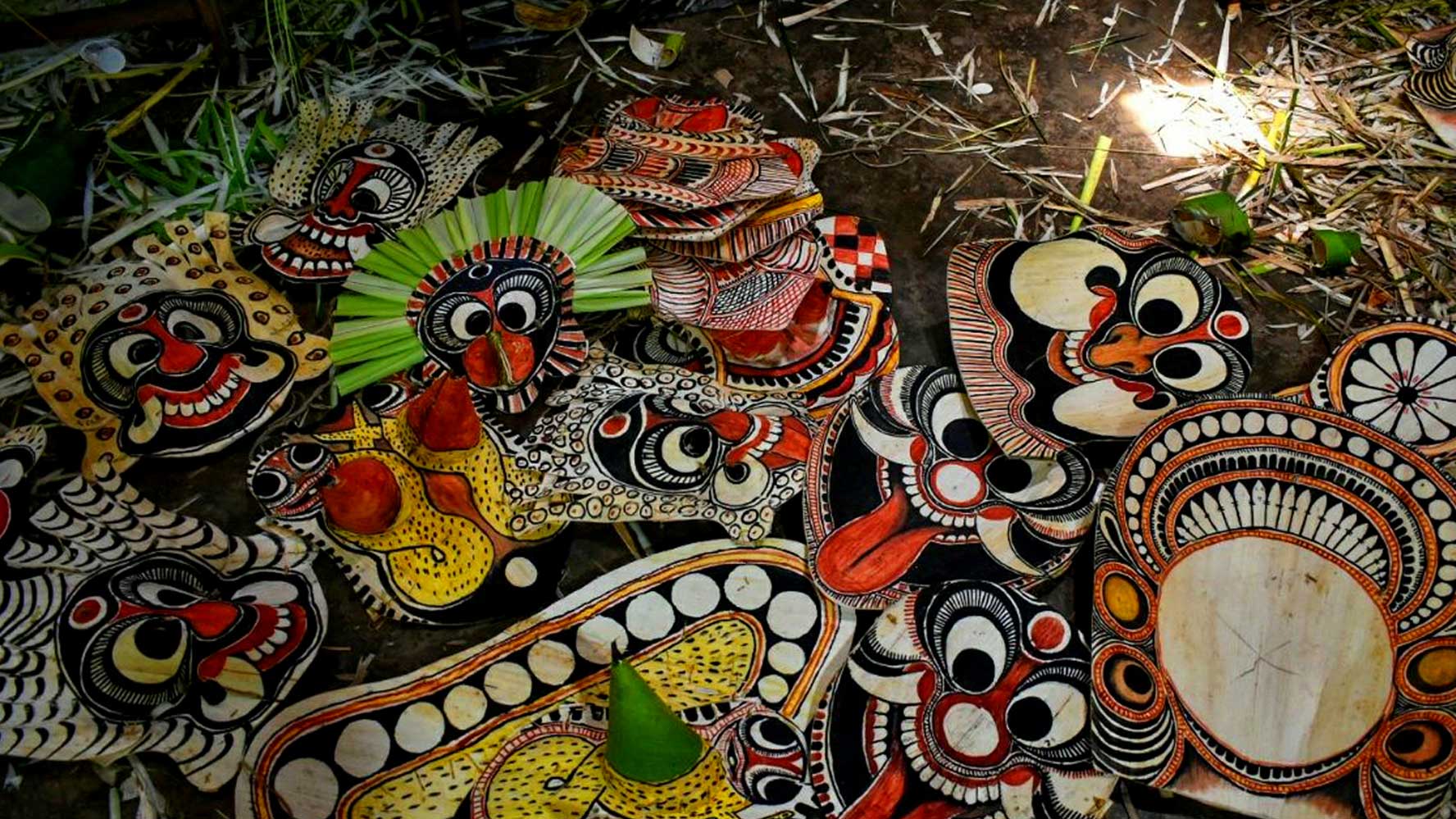
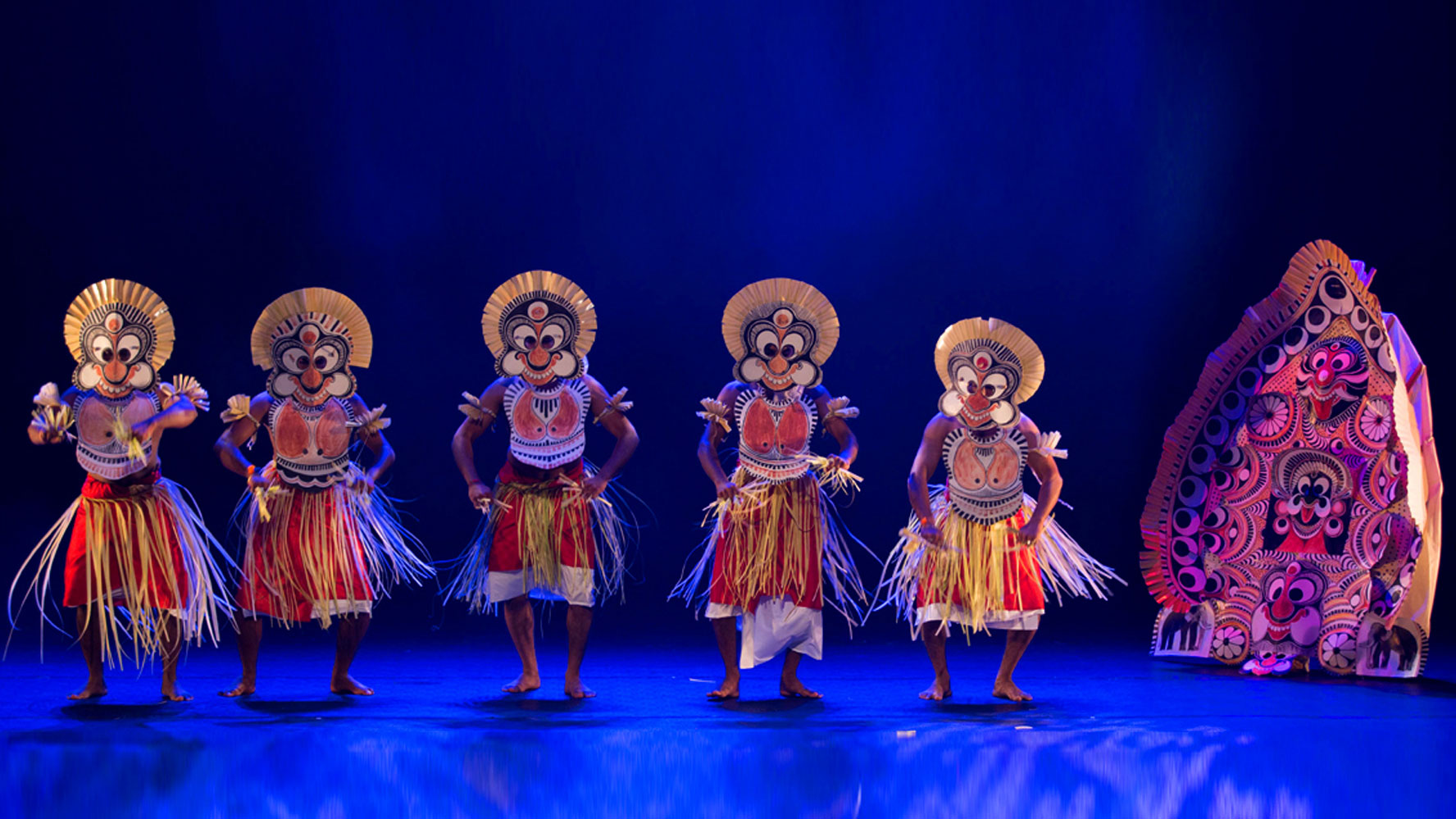
Padivattom. Each kolam has its own dressing and adorning style. Tender
coconut leaves, Charcol paste, manayola (a mineral) silks etc. are the main
materials used for kolam preparation in general. Foot steps employed in
kolamthullal are Otta(single), Iratta( double) mukkanni and valyamukkanni. Performers take various ‘Kalayams’ such as
Ottakalayam,
Chadikkalayam, Murikkalayam , panthakkalayam etc.
Different types of Kolam
Vellayum Kariyum
Face of the artist painted half white and the
other black. Painting directly on the face is considered to be the oldest way
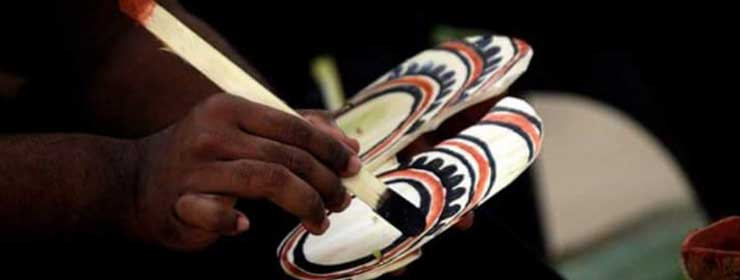
of kolam creation. The system of painting kolam on Areca leaf sheath came in
to existence later. Vellayum Kariyum symbolically represents the concept
'from darkness to light' or 'from wickedness to goodness'. This kolam performs
Ganapathi and Padivattom on the four sides of the temple and also at padayanikkalam.
No other dance seen performed by this kolam. No evidence is available
regarding the evolution of this kolam. Vellayum kariyum is staged at
Kurampala alone and not elsewhere.
Ganapathikolam.
This kolam is rarely staged. It is also known as
sivakolam. Areca leaf sheath is made with Nagappathy(Serpent head).
Below this there are rounded lines towards the bottom. Face is painted
green. Skirt made of tender leaves of coconut worn above red silk. There
will be chilampu on the legs. Kolappattu describing the birth of lord
Ganapathi is sung in a fast rhythm. Nagappathy on the cap reminds the concept
of Lord Shiva. Now a days Ganapathi Pishachu kolam is mistakenly staged at
different places as Ganapathikolam.
Ganapathi
Pishachu Kolam
Though in the name there is Ganapathi, this
kolam is not at all related to Lord Ganapathi. In the song it is addressed
as Pepishachu who came forth to make goddess Parvathy, (wife of
Shiva), get rid of the influence of wicked elements. Face mask is cut taken
from a single areca leaf sheath. Top of the mask resembles Thrisul. This kolam
might have got its name ganapathi Pishachu as it comes first in the kolam
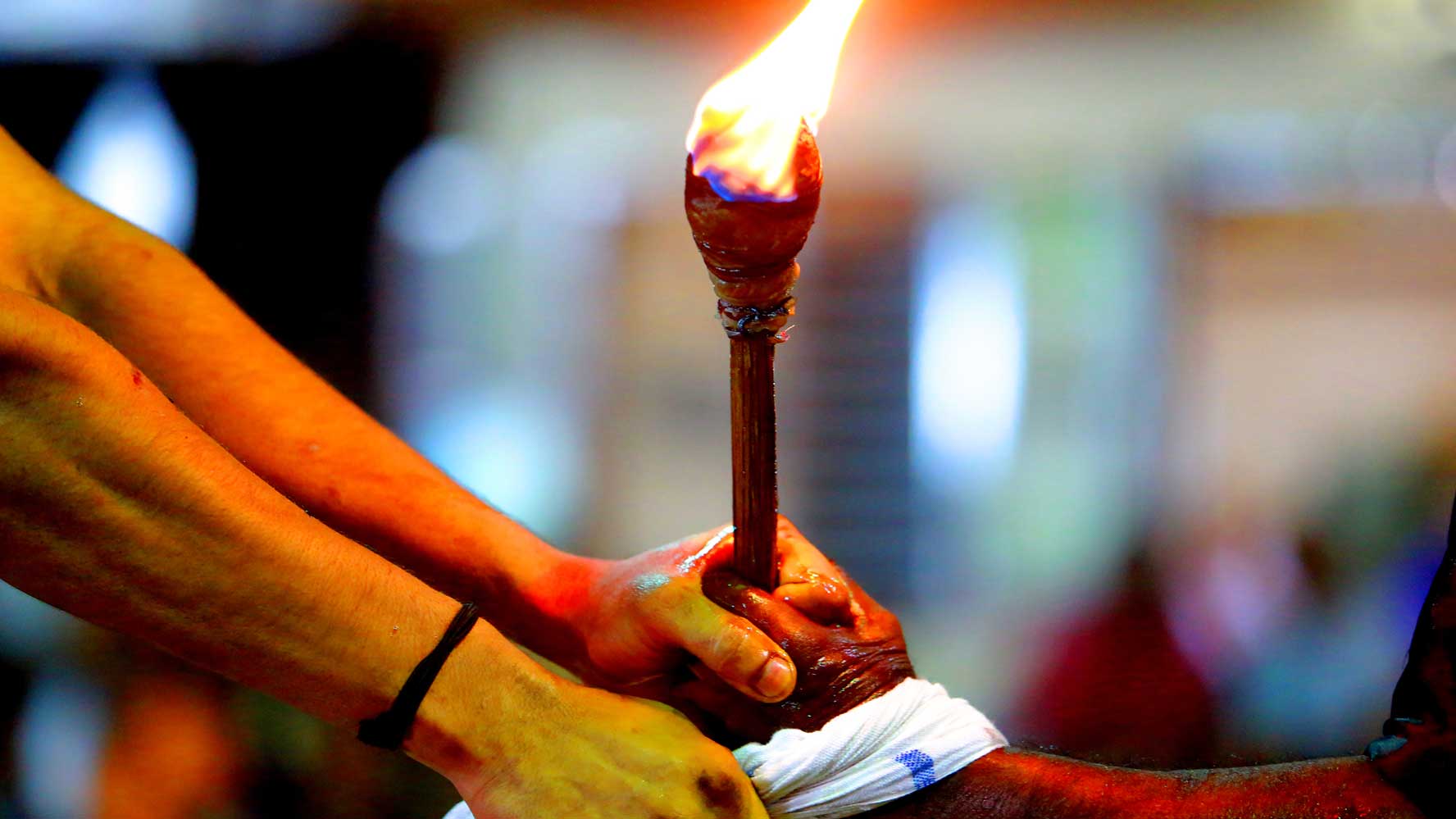
performance. Wearing coconut tender leaf skirt above silk one, holding
lighted torch (Choottukatta)
in both hands kolam performs dances. Song of slow rhythm in adantha thalam
and that of fast rhythm in muri adantha thalam are sung while staging
this kolam. This kolam reflects, as it seems, some black magic rituals
performed by ancient society to safeguard themselves from the wicked effects
of Bhootha Prethathi elements.
Kuthira Thullal
This is neither supported by deity concept nor
by customary rituals. In some places this is known as Kuthirakkolam.
(Preparation of Kuthirakkolam is described under this topic kolamezhuthu).
Already prepared horse model is fixed to the waist of the artist. Strings
tied to the both ends of the horse model are passed over to the shoulders of
the artist and firmly held by the left hand to keep it in position. In the
right hand there will be a whip to rear the horse. Hair is covered with white
cloth like ‘Arabs’. There will be artificial moustache and beard. Along
with kuthirakkolam there will be ‘Pattani’ (Muslim Merchant) dressed people
with whip and cloth bag in hands appear in the kalam. Kuthirathullal hints
on the ancient trade relation of Kerala with the Arabs. Kolappattu describes
the travelogue of merchants going to purchase war horses from Arab countries
for Cheraman Perumal (oldest emperor in Kerala).
Marutha Kolam.
Mother goddess marutha is worshipped as deity
of small pox. Marutha concept varies as Easanthan Marutha, Neelakeshy
Marutha, Pandara Marutha, Pacha Marutha, Anamarutha etc. Marutha kolam is
staged to eradicate small pox. Anger of marutha causes a number of physical
disasters like incurable white discharge, high body temperature, aversion to
eatables, unbearable thirsts, swelling on body parts in addition to smallpox. Kaali killed Darika,Darika’s wife
Manodari sow seeds of smallpox on
Kaali as
a revenge. Manodary was later transformed to Marutha.
The performer reaches the kalam with kolam
wearing leafy twigs of Ilanji tree ( at the waist and holding rod, broom, Muram and knife in hand. After Ganapathy and padivattom,
Chat commence.
It includes various domestic activities like sweeping the premises, combing
hair, drying rice, heaping rice, grinding rice in grindstones etc. In the
end taking some broken rice in hand, plans to put it in mouth. But just
before doing this the kolam pauses a little as if it remembers some
other thing. The broken rice is thrown round in all the four directions one
hand full to each. Taking the fifth handful rice, Marutha produces an unmanly
utterance. Hearing this plenty of maruthas including child marutha (pilla
marutha) come forward to the kolam producing horrible sounds. Different
strides namely otta, Iratty, Mukkanni, Valyamukkanni, Kothukal, Porukal,
Thettineekkam are employed in maruthakkolam. Songs are in ‘Adantha’ slow,
‘adantha’ and ‘muri adantha’ style.
Madan Kolam
Madan is a wicked god who can kill a person just
hitting on his shadow. Vadimadan, Thoppimadan, Chetta Madan, Pullimadan,
Kalamadan etc. include in the Madan list. Madan kolams are staged
indifferent days. It is further believed that Madan is the protector god of
cattle. On the forehead of the Madan kolam a third eye is also generally
painted. Top end of the kolam is cut made to the shape of Shivamudi. Chest
shield and poonool (holly thread) are also painted for the kolams. Kalamadan
is the supreme commander of Kaalam (time). Vadimadan holding a stick in
hand, performs vigourous dance looking at the sky. At intervals fearfully
hitting ground with the stick, Vadimadan makes loud horrible sound. There
will be painted dots (pully) on Pullimadan kolam. Thoppimadan bears a hat
made of Areca leaf sheath. Chettamadan kolam is fully painted on leaf sheath
and is fixed stitching on a woven coconut leaf frame. Holding this huge
structure, the performer take rhythmic steps.
Yekshi Kolam
Variety of Yakshi kolams are staged in Padayani.
Each Yekshi kolam has its own specialiteis and characterstics in features,
expressions and also in performance. Common people consider Yekshi as
frightening supernatural element with wild features. Apart from this concept
in padayani, Yekshi is worshipped as embodiment of beauty. Yekshi is a true
kin to man. She safeguards him from calamities.
Sundara Yekshi
Face mask cut made from a Single Areca leaf
sheath, Nenchu mala (Chest shield)., colourful silk at the waist, above
that
skirt made of tender coconut leaves, areca inflorescence in hands, tender
leaves of coconut palm on fingers- these
are the features of Sundara Yakshi kolam. Team of at least four kolam
should perform dances at a time. This number can be raised to six or eight.
After Ganapathy and padivattom kolam performs ‘ Nirathithullal’. General
strides are Chittadi, otta, Iratty, Mukkanni, Valyamukkanni, Vettiyettam,
Chavittyirakkam and vattachuvadu. ‘Thalams’ employed are ‘marmathalam,
Adantha slow, Adantha otta and muri adantha. The song addresess deities of
beauty who can compete with and defeat the supreme beauty queens. It is
persumed that deities of beauties come to the kalam and present their magic
dance and finally vacate themselves.
Anthara yekshi.
This is a crown shaped kolam. To keep the kolam
in position a string embedded within the kolam is tied fast the chin of the
performer. At last nine areca leaf sheaths are required for the preparation
of crown, Chest shield (nenchu mala) waist shield etc. of Antharayakshi. Bangles
and nails of tender coconut leaves are there on both hands of this kolam.
Tender leaf skirt at the waist and kachamani on legs are other features. Face
is painted with Manayola, Chayilyam(green color) or Charcol paste.
Artificial protruded teeth is fixed and then presented to the kalam after
Ganapathy and padivattom, performer takes Porukal steps. Then commences
song in Chattadantha style.
Ambara yekshi
In features Ambarayekshi resembles Antharayekshi.
Ambarayekshi performs Ganapathy and padivattom standing on a wooden frame
with a cloth ceiling. As this Chattom (frame) moves forward, yekshi assumes
the style of a flying goddess. Finishing Ganapathy and padivattom Yakshi
comes down to the ground and begins to perform dance. Foot strides,
movements of hand and body etc. remind the viewers of a plight in the sky.
Ambarayekshi performed at Kunnamthanam padayani.
Arakki Yekshi
It has a frightening appearance. This kolam has
been disappeared from almost all padayani stages. Mode of dancing of this
kolam differs much from that of other and at the same time more interesting
than many others. From the kolam mask, face round is cut off. Eyes are
artificially painted, protruded teeth are fixed, silk skirt and tender leaf
skirt worn one above the other at the waist. Kachamany worn on the legs the
kolam reaches the kalam. Strides of Ganapathy and padivattom are taken
behind a curtain After that the kolam performs Adavu which are five
in number After each Adavu there will be kalayam. At this time the curtain raised
once and again covers the kolam. After the Adavu there will be Porukal and
then song of Muriadantha style.
Erinaga yekshi
Though there are songs on Erinagayekshi,
Karinagayekshi, Paranagayekshi, Ayaliyekshi etc. kolam dances of such items
except those of Erinagayekshi and Ayaliyekshi have become extinct or very
rare
Mayekshi
Though this is a crown like kolam mode of
assembling varies much from that of antharayekshi. like antharayekshi there
will be chest shield, waist shield, tender leaf skirt and kalchilambu in this
kolam. kannumkuriyum protruded teeth etc. make it
different from the former one. Charcoal is painted on the face. In the hands
there will be sword and lighted torch (pantham). Mayekshi is regarded both
as the deity of destruction and that of prosperity.
Kalayekshi .
Kolam cut made from fifty one Areca leaf sheath
for Kalayekshi is a fearful sight. Kalayekshi wear silk skirt and tender
coconut leaf skirt one above the other. A Pantham (lighted torch) is
inserted on the main face of the kolam. The practice of performing dance on
burning cinders is also seen at some places.
Pakshikkolam
A certain type of bird sitting on trees near to
houses with new born babies utter a special sound ‘Kunje... Kunje....’(oh!
Baby oh! Baby). Owing to the ill effects of this bird, the child looses its
general health and often subjected to diseases. With anaemic appearance,
shapeless buttocks, inflated stomach the baby takes last breath very soon.
The Villagers generally try to drive away this deadly creature. But a
complete revival from the ill effects of the bird is made possible only by
satisfying it through necessary sacrificed offerings. Pakshikkolam is staged
for this purpose. At the mouth of the kolam beak made of areca sheath is
fixed, Nenchumala, Aramala, red silk skirt, tender coconut leaf are there as
in other kolams. Coconut tender leaf, removing bony leaf vein (eerkil) is
placed as such on the back of the kolam and is held by both hands on
eitherside Pakshi reaches the kalam with porukal movements. story of
employing a bird by ‘Kamsa’ to attack ‘Sreekrishna’ is sung for Pakshikkolam.
Kalan Kolam
Kalan kolam enjoys kingly status in Padayani.
Only a master artist can perform Kalankolam. Crown shaped kolam has three or
five faces. Charcoal paste on the face, Kannum kuriyum, protruded teeth,
Tender leaf skirt over red silk skirt, Kachamani on legs. cascade of hair
covering the backside, sword in the left hand’ are the features of this kolam.
A long cloth fastly tied to Alaku (dry areca tree pieces ,Base frame of kolam) is drawn through
armpits of performer tied behind him. This arrangement is to keep the
kolam in right position.
A number of strides such as otta, iratti,
mukkanni, valyamukkanni, thettineekkam, vettimattom, chavittiyirakkam,
chavittikkalayam, kothukal, porukal; kalayams such as Ottakalayam,
Irattikkalayam, Murikkalayam, Chadikkalayam, Odikkalayam, Panthakkalayam
etc. and nottams such as Nilanottam, Kutharinottam etc. are employed in
kalankolam. ‘Markandeyacharitham’ is the theme of kolappattu sung for
Kalankolam. In certain places sung Ajamilamoksham and Sivamahathmyam are
sung. Another Character controls these kolam and forcefully takeout sword
and torch from the hands of kolam artist. though this character has no
adornments or special decorations, he attracts the attention of ierr
because of his physical strength and artistic awareness. Thullal adverse
through Slokas and songs in Thom thiminthaka Thalam and adantha single
style. In the cause of dance the kolam is made forcibly seated on an ural
(grindstone placed in the kalam) places in the kolam. The thullal artist, at certain other
occasions jumps directly backward and climbs the Ural and there he takes
several foot steps.
Bhairavi,
Ninabhairavi, Kanjiramala.
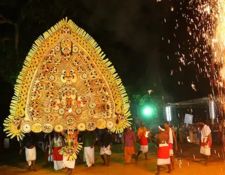
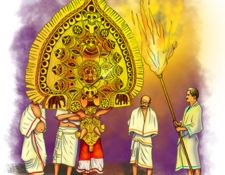
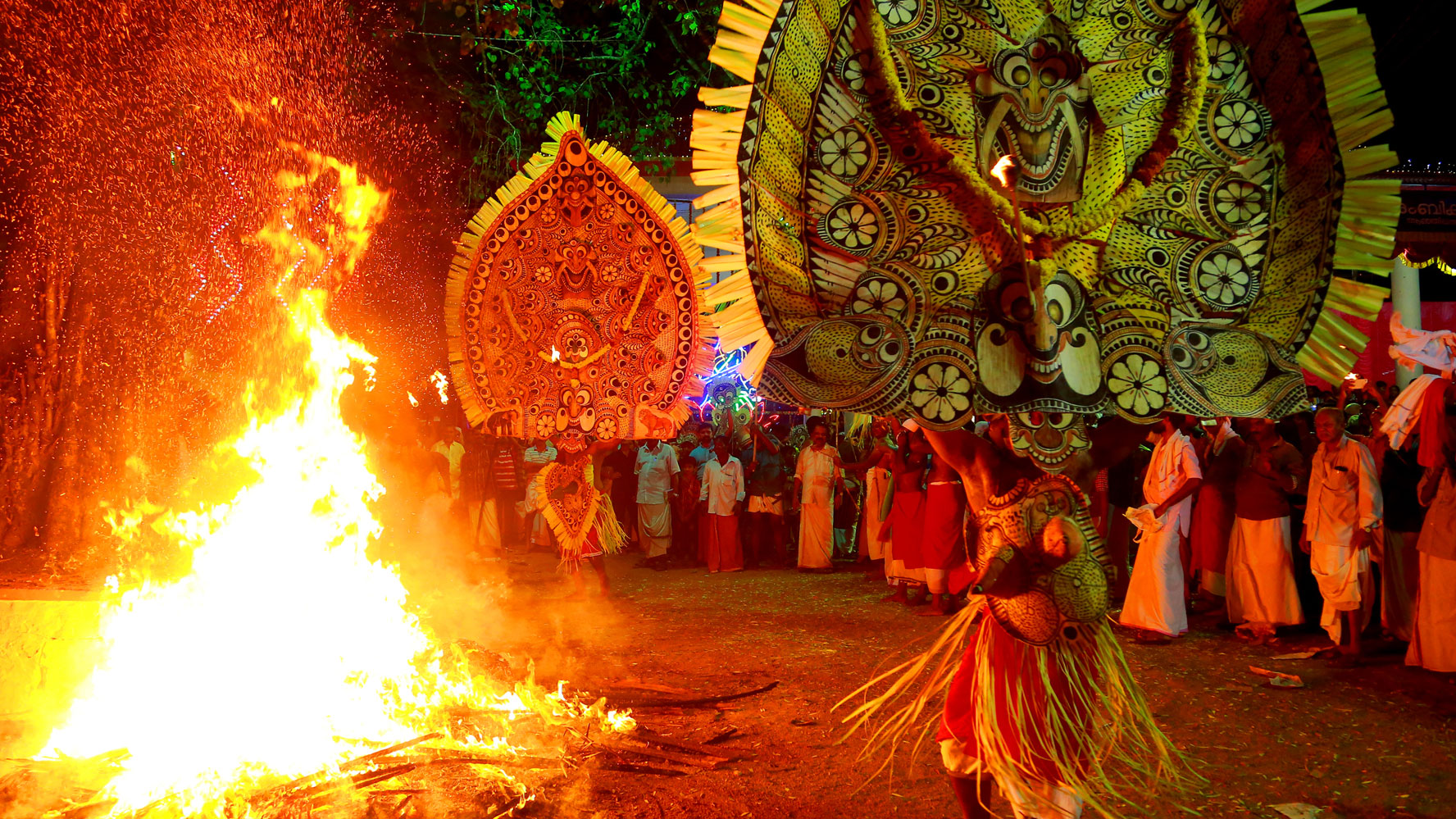
Bhairavikolam is made of 101 Areca leaf sheaths.
It is the true depiction of the fearful form of Bhadrakali after
killing Darika. Bearing the kolam on the head, wearing Kurutholapavada (coconut
tender leaf skirt) over red silk Bhairavi appears in the kalam Bhairavikkolam is otherwise called Mangalakkolam. This kolam comes to
Kalam towards day break, after the retrieval of all other kolams.
Bhairavikkolam seeks pardon for the faults and foibles that might have
occurred in kolam performances during Padayani days.
Kanjiramala is like Bhairavi except for a few
differences. Kolam for Kanjiramala is made from 81 Areca sheaths. In Bhairavi
elephants and lion are painted on the ear. But in Kanjiramala serpent and
flowers are drawn in their place. As both the hands of the artist used for
holding the kolam, it is hardly, possible to make hand-body movements. |